The Shopify Local Delivery Tools You Actually Need
Most Shopify stores need five local delivery tools: zones and rates, a date and time slot picker with limits…
Insights
Route optimization cuts fuel and delivery time for Shopify stores by putting stops in the order that takes the least driving across all your drivers, inside each booked delivery window, shift and vehicle limit.
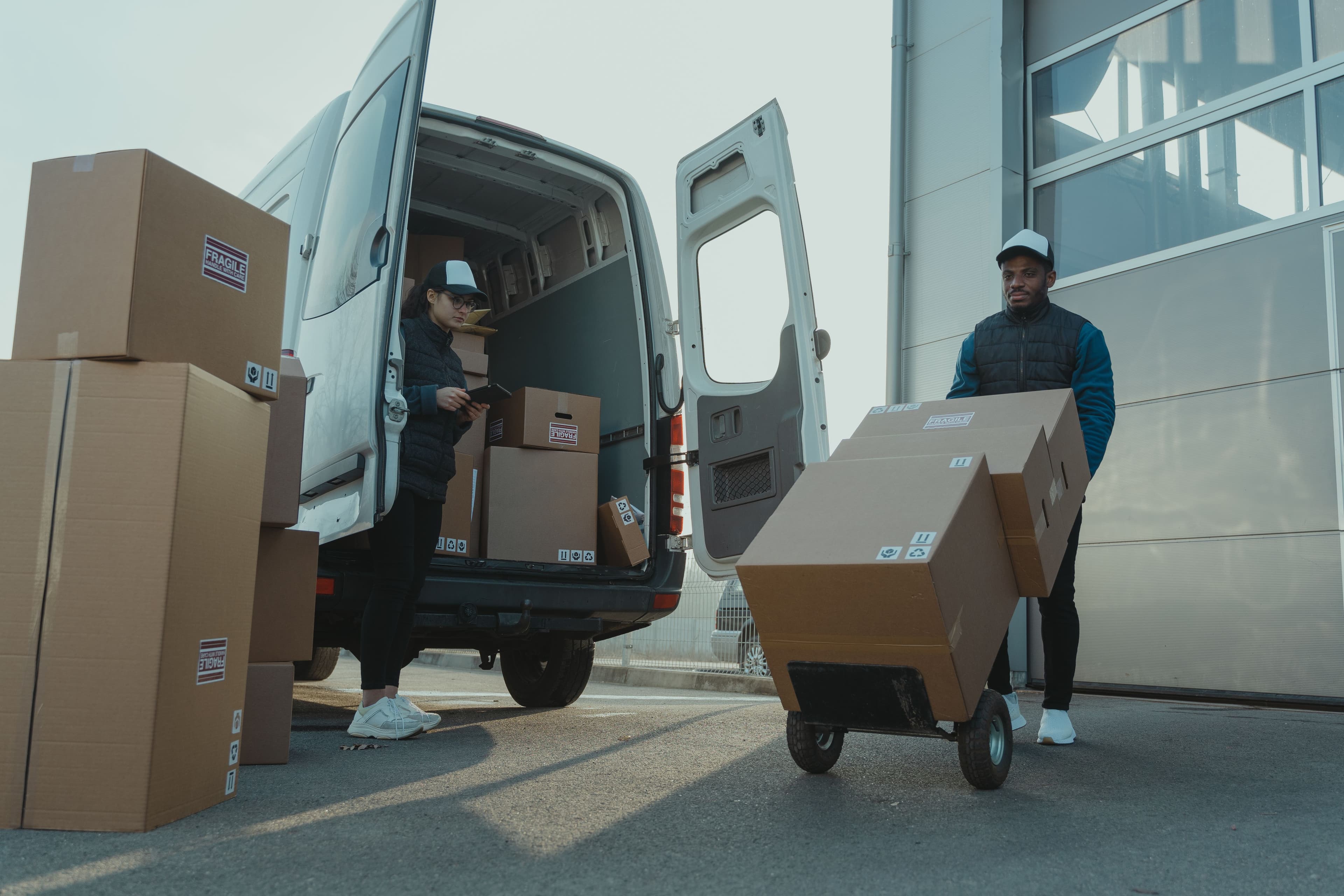
Route optimization for a Shopify store takes the day's local delivery orders and works out which driver takes which stops, and in what order, so every route covers fewer miles in less time while still arriving inside each customer's delivery window. Fewer miles burn less fuel. Shorter, better-ordered routes get orders to the door sooner and fit more stops into each shift.
This guide shows where hand-planned routes leak fuel and time, the five levers that win it back, what Shopify gives you for free, and how to set up route optimization step by step.
Route optimization is software that solves a routing puzzle: given a list of stops, your drivers and their limits, find the routes that finish the work with the least driving. With one driver, it's about stop order. With several, it also decides who takes which stops. The shortest line on a map isn't enough: a useful optimizer also plans around the delivery windows customers booked, driver shifts and breaks, vehicle capacity and traffic.
In ScrollEngine, route optimization plans routes for multiple drivers with capacity, time windows, shifts and breaks, and the route planner adds traffic, tolls and a distance and time preview before you commit. Advanced route constraints depend on your plan.
Plotting stops by hand on a map app works for five orders. Past that, the same leaks show up in almost every local delivery operation:
| Leak | What it looks like | What fixes it |
|---|---|---|
| Backtracking | A driver crosses the same neighborhood twice because stops went out in order-number order | Stop sequencing that minimizes total drive time |
| Unbalanced drivers | One driver runs late with a long list while another finishes early | Planning all drivers together, with shift and route-length limits |
| Second trips | A van returns to reload because the plan ignored what fits | Capacity limits per vehicle |
| Searching for the door | Drivers circle and idle looking for a vague address | Exact map locations before the route leaves |
| Rush-hour routes | A route that looked short at 7 a.m. crawls at 5 p.m. | Traffic-aware planning and live ETAs |
| Failed attempts | Nobody is home, so the stop gets driven twice | Delivery windows booked at checkout, plus updates before arrival |
Idle time adds up. According to the U.S. Department of Energy's Alternative Fuels Data Center, U.S. passenger cars, light-duty trucks, and medium- and heavy-duty vehicles consume more than 6 billion gallons of diesel fuel and gasoline each year without even moving. Every minute a delivery van idles outside the wrong building is part of that bill.
The optimizer orders stops so a route flows through each area once instead of zigzagging. Fewer miles means less fuel, less wear on tires and brakes, and fewer paid hours on the road.
When the whole day's orders are optimized together, each stop goes to the driver who is already nearby. Two vans stop covering the same streets, and workloads even out.
Capacity limits keep the plan from giving a vehicle more than it can carry, so drivers don't come back mid-shift to reload.
With traffic in the plan, travel times between stops reflect real road conditions instead of empty-road guesses, so a route that looks short on paper doesn't crawl at rush hour. Avoiding tolls helps where a toll costs more than the detour.
Each failed attempt is a stop you drive twice. Map-pin capture at checkout, a pin-drop link customers use to confirm their exact spot, and automatic geocoding put the van at the right door. Booked delivery windows and "on the way" messages make it more likely someone is there to receive the order.
Instead of sequencing stops by hand each morning, you select the day's orders and drivers, run optimization, and review each route's distance and time before you save. The person who used to build routes now checks them.
Shorter routes finish sooner. The time saved goes back into capacity: more stops per driver, or an extra afternoon wave without adding a vehicle.
When planning is fast and routes are tight, you can accept orders later in the day and still deliver them on time. Expectations are already that short for some categories. According to AlixPartners' 2026 Home Delivery Survey, shoppers expect grocery and food orders in 0.9 days. AlixPartners, 2026 Home Delivery Survey (Jun 2026)
Routes stay editable after they start. Add a late order or move a stop and ETAs for the remaining stops are recalculated, so a road closure or an urgent order doesn't mean starting over.
Yes, for simple cases. Shopify's free Shopify Local Delivery app lists "automatic or manual route planning for your drivers for up to 100 stops" and says you can "easily optimize delivery routes to minimize driving time". Drivers get directions in their default map app, and customers get automated delivery status emails (Shopify App Store listing, as of Oct 2026).
That covers a short daily list. Choose ScrollEngine when you need to:
To see how the apps compare, read our comparison of Shopify apps for routing and local delivery and EasyRoutes vs ScrollEngine.
Here is the setup in ScrollEngine. The order is similar in most route planning apps.
To rebalance several routes at once after you've saved them, see our bulk route editing tips. For the full feature tour, see the ScrollEngine route planner.
Route optimization pays off in numbers you can track. Record a two-week baseline before you switch, then compare:
In ScrollEngine, driver scorecards in the standalone web dashboard (not inside Shopify admin) show deliveries, distance driven, time on the road, utilization, ratings and on-time rate for every driver, and reports export routes and shipments to CSV for finance.
BestPerfume.Store, a fragrance retailer in Singapore, plans routes for several drivers together in ScrollEngine and has its drivers work from the mobile app. The results ScrollEngine has published for the store include "40% Faster Dispatch" and "25% More On-Time Deliveries". Read the BestPerfume.Store case study.
Hand-planned routes cost you fuel, hours and on-time deliveries every day. Route optimization gives those back without adding drivers, and it works whether you run one van or a fleet.
Try Local Delivery + Pickup Date:S on the Shopify App Store to plan optimized routes from the delivery slots your customers book.
Editor's note: first published August 19, 2026. Updated October 2, 2026 with a setup checklist, a measurement plan, Shopify's own route planning (as listed on the App Store) and sourced figures.
FAQ
It depends on how your routes are planned today. The savings come from fewer miles, fewer second trips and less time spent hunting for addresses, so stores that plan by hand, or send stops out in order-number order, have the most to gain. Measure miles per stop for two weeks before and after you switch: that is the clearest read on your own fuel savings.
Shopify's free Shopify Local Delivery app lists automatic or manual route planning for your drivers for up to 100 stops, and route optimization to minimize driving time (App Store listing, as of Oct 2026). If you plan more stops than that, or need routes built around booked delivery slots, shifts and vehicle capacity, ScrollEngine plans them for several drivers at once, with the driver app and live tracking in the same app.
Install a route planning app, add your locations and delivery zones, and let customers book a delivery date and time slot. Then select a day's orders and the drivers who are working, run optimization, review each route's distance and time, and send the routes to your drivers' app.
Yes. With one driver, optimization puts the stops in the order that takes the least driving while keeping each booked delivery window. That saves planning time every morning and gets orders out sooner.
Shopify Local Delivery is free (App Store listing, as of Oct 2026). ScrollEngine puts delivery slots, route optimization, the driver app and live tracking in one app, with a 7-day free trial on your own store. Maps, address checks and ETAs run on your own Google Maps Platform key, billed to you by Google.
From the blog
Most Shopify stores need five local delivery tools: zones and rates, a date and time slot picker with limits…
To reduce your Shopify local delivery costs, add up a typical week's driver time, vehicle, failed attempts…
Scale Shopify local delivery by fixing the promise before adding drivers: zones and slot limits per location…
Book a demo and we'll walk you through the platform set up like your stores, or request a quote for your locations and how you deliver.
2,000+ merchants trust us (as of Oct 2026)100+ merchants rate us 5.0 stars on the Shopify App Store (as of Oct 2026)