
Learn how Shopify stores simplify 3PL fulfillment, connect shipping carriers, create shipments faster, and manage fulfillment workflows from one dashboard.

As ecommerce businesses grow, fulfillment becomes harder to manage. Teams must process more orders, coordinate multiple carriers, and maintain fast shipping without creating delays.
Many Shopify merchants now use 3PL providers to improve shipping speed and simplify logistics operations.
However, adding 3PL providers does not automatically create an efficient fulfillment workflow.
Many businesses still manage shipping across disconnected systems, which slows down fulfillment and increases manual work.

3PL, or third-party logistics, helps ecommerce businesses outsource shipping and fulfillment operations.
3PL providers typically handle:
For growing Shopify stores, this helps teams:
As order volume increases, many businesses rely on 3PL fulfillment to avoid operational bottlenecks.
Many Shopify merchants connect with 3PL providers but still manage fulfillment manually.
Teams often:
This slows down shipment creation and increases the risk of fulfillment errors.
The problem is not the shipping infrastructure itself. The problem is fragmented workflows.
Fulfillment becomes much easier when businesses manage orders, shipping, and carrier selection from one place.
Instead of switching between systems, teams can:
Centralized workflows reduce manual coordination and improve fulfillment speed.
Scrollengine allows Shopify merchants to connect 3PL carriers directly inside the dashboard using an API key.
Once connected, carriers automatically appear during shipment creation under Standard Shipping.
This helps teams manage fulfillment without relying on external systems.
Carrier selection happens alongside:
This keeps shipment creation faster and easier to manage.
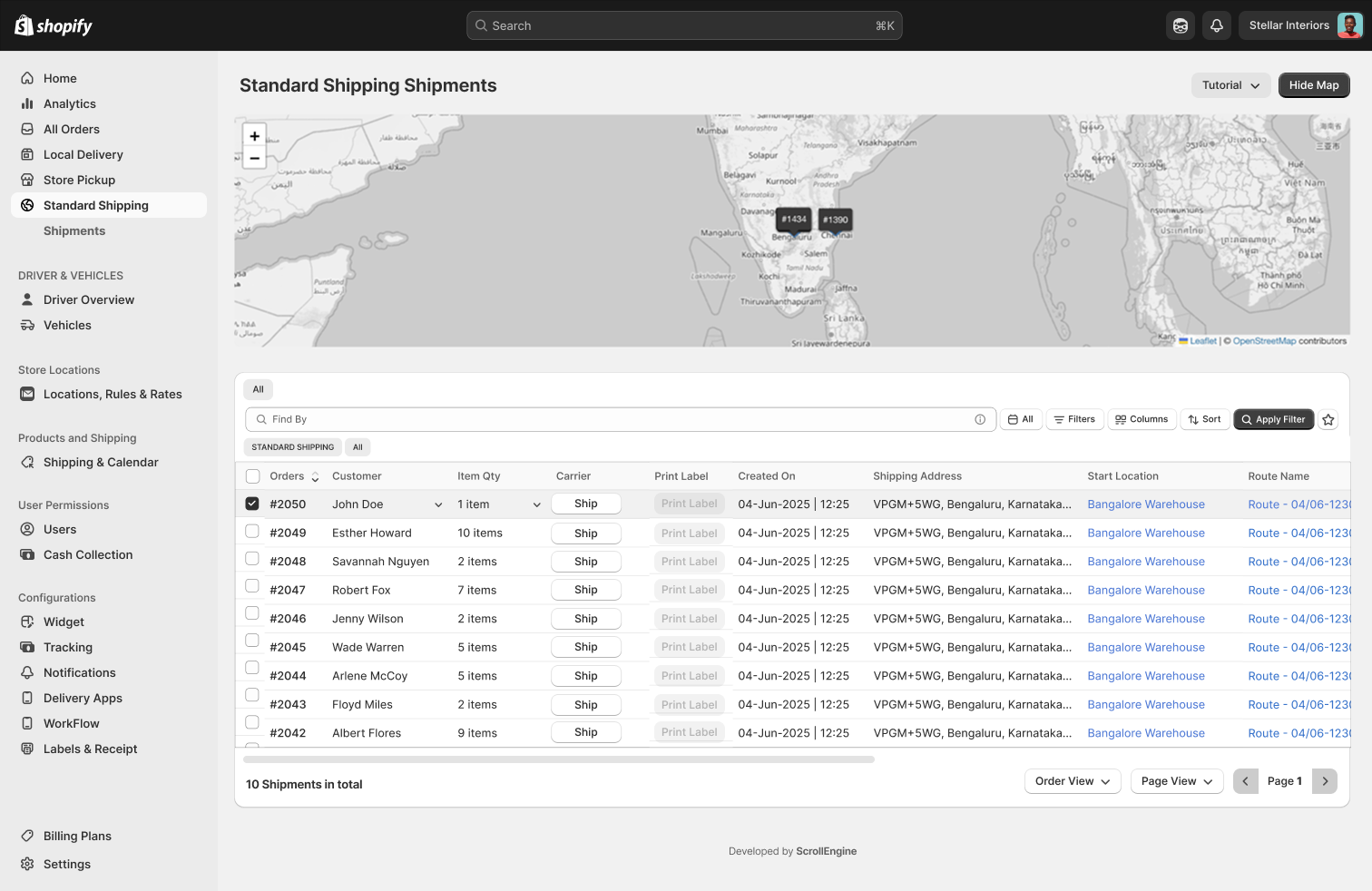
Shipment creation becomes part of a structured workflow inside Shopify.
As customers place orders, Shopify automatically syncs them into Scrollengine.
Teams can view:
from one dashboard.
Teams can choose how each order will be fulfilled.
Options may include:
When teams select standard shipping, the system prepares the order for shipment creation.
Teams can create shipments directly inside Scrollengine through the Ship button next to each order.
Connected 3PL carriers appear automatically as available shipping options.
This allows teams to:
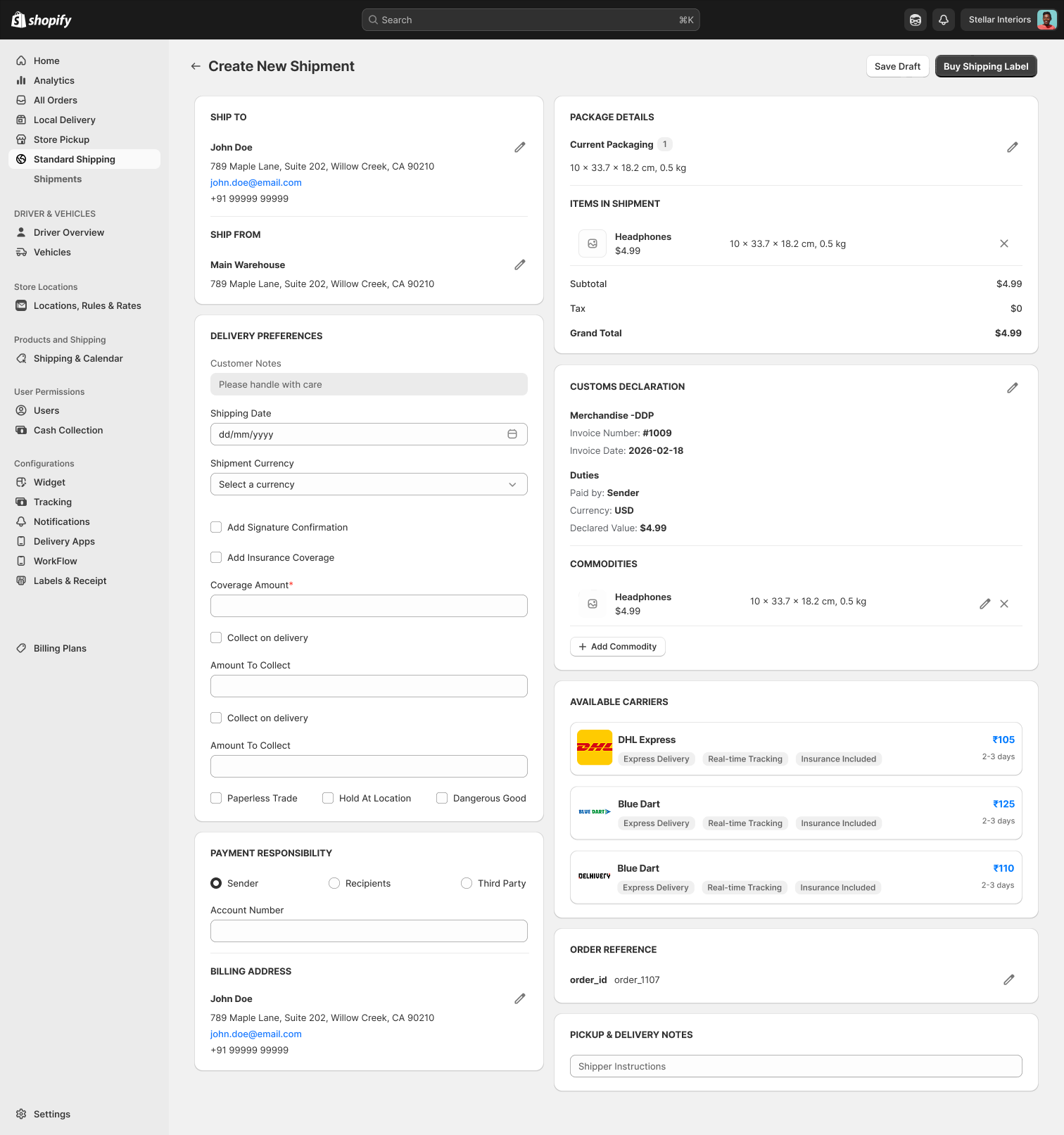
Once teams create shipments, carriers generate shipping labels or manifests automatically.
Teams can print these documents directly from the dashboard.
This reduces extra steps and keeps fulfillment workflows organized.

Integrated workflows help businesses reduce delays and simplify fulfillment operations.
For Shopify stores, centralized fulfillment systems help teams:
As businesses grow, connected workflows become more important for maintaining fast and reliable shipping.
As shipping volume increases, fulfillment systems must support larger order volumes without increasing operational complexity.
Flexible fulfillment workflows help Shopify merchants:
A scalable fulfillment workflow improves both operational efficiency and customer experience.
Shipping is now part of the ecommerce customer experience.
Customers expect:
When fulfillment workflows are slow or disorganized, customer trust decreases.
Efficient fulfillment systems help businesses improve delivery reliability and reduce support requests.

As ecommerce businesses grow, fulfillment workflows become more difficult to manage manually.
3PL fulfillment helps Shopify merchants improve shipping operations, but connected workflows are equally important.
Centralized shipment creation, carrier management, and fulfillment coordination help businesses process orders faster and scale more efficiently.
👉 Explore the Scrollengine Local Delivery+Pickup - SE app on Shopify today!